
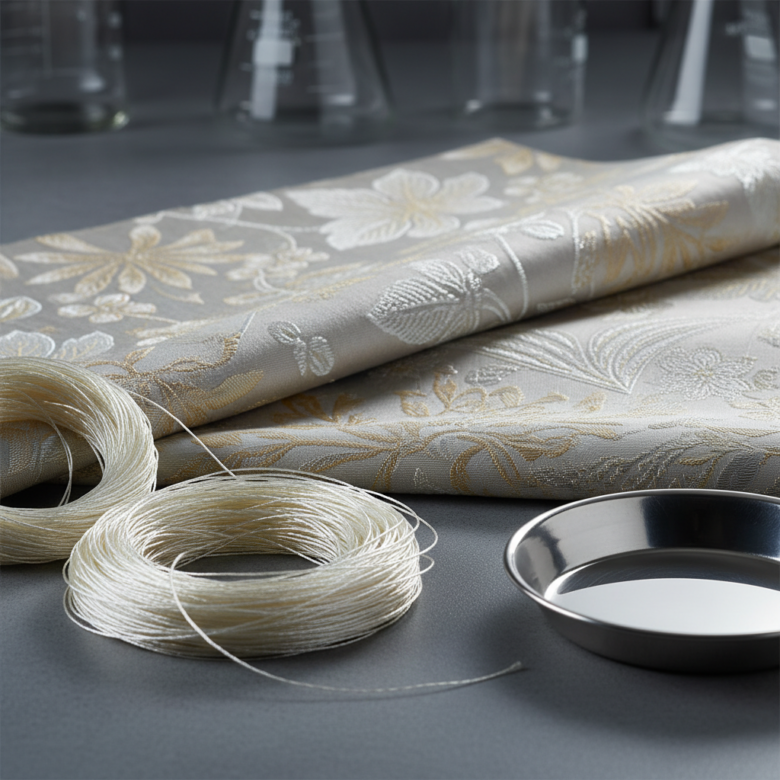
luxury italian fabrics are often discussed as if sheen were a matter of taste alone. It is not. In high-end interiors, sheen is a material outcome. The look of silk depends on fiber geometry, yarn behavior, weave structure, and finishing. Once those are understood, the visual result becomes much easier to control.
Britannica’s overview of sericulture is a useful starting point because it grounds silk in production rather than mythology. Silk begins with the cocoon filament of the silkworm. The pathway from cocoon to usable textile is technical from the first step. Source: Britannica, Sericulture.
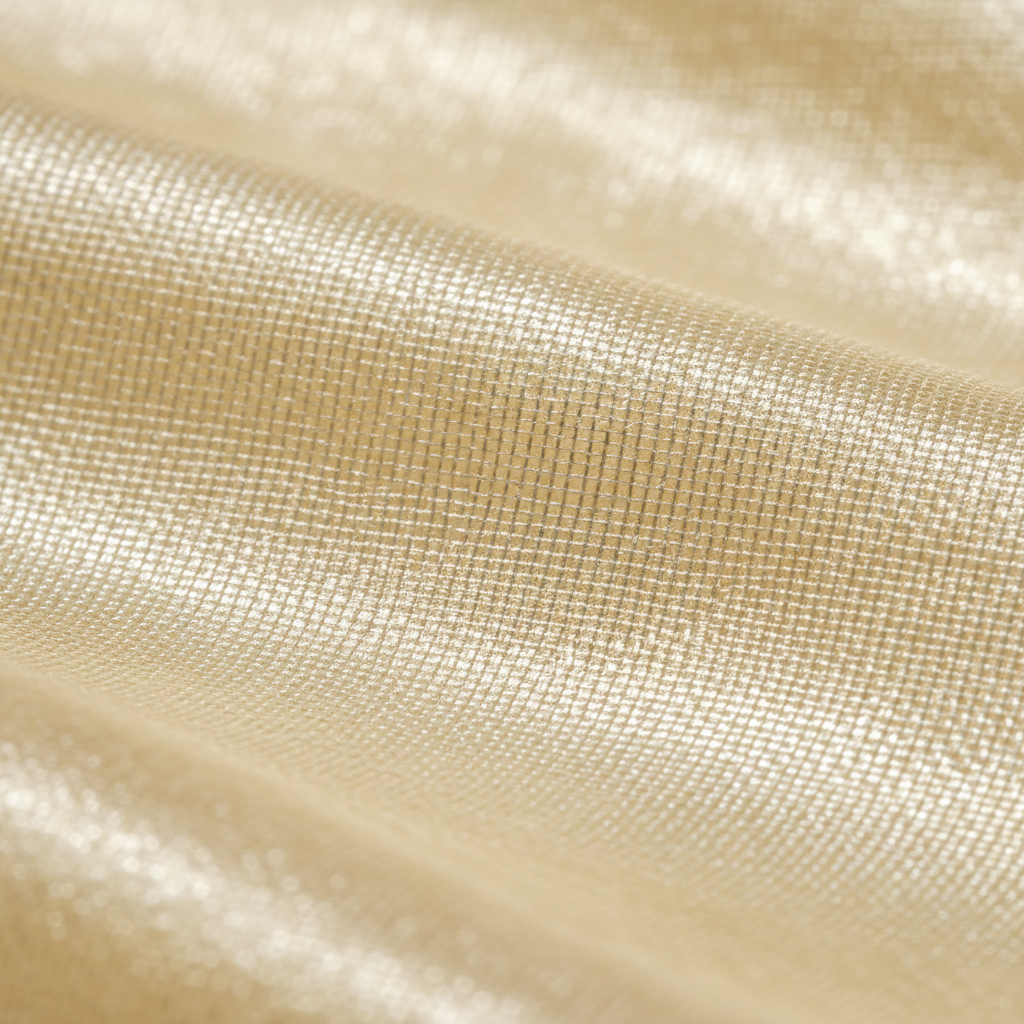
One of the key technical steps is degumming, the removal of sericin from silk. Designers do not need to perform the chemistry themselves, but they should understand the effect. When silk is properly processed, it reveals the smoothness and luster that make it so effective in luxury interiors. The sheen is not arbitrary. It is tied to the physical behavior of the fiber and the finish of the woven surface.
The Met’s Italian velvet material gives the historical proof. The museum’s description of silk and metal-thread velvet from the second half of the 15th century shows how much visual complexity could be built from a sophisticated material system. Luxury sheen in interiors has always been engineered. Source: The Met, Panel of velvet.
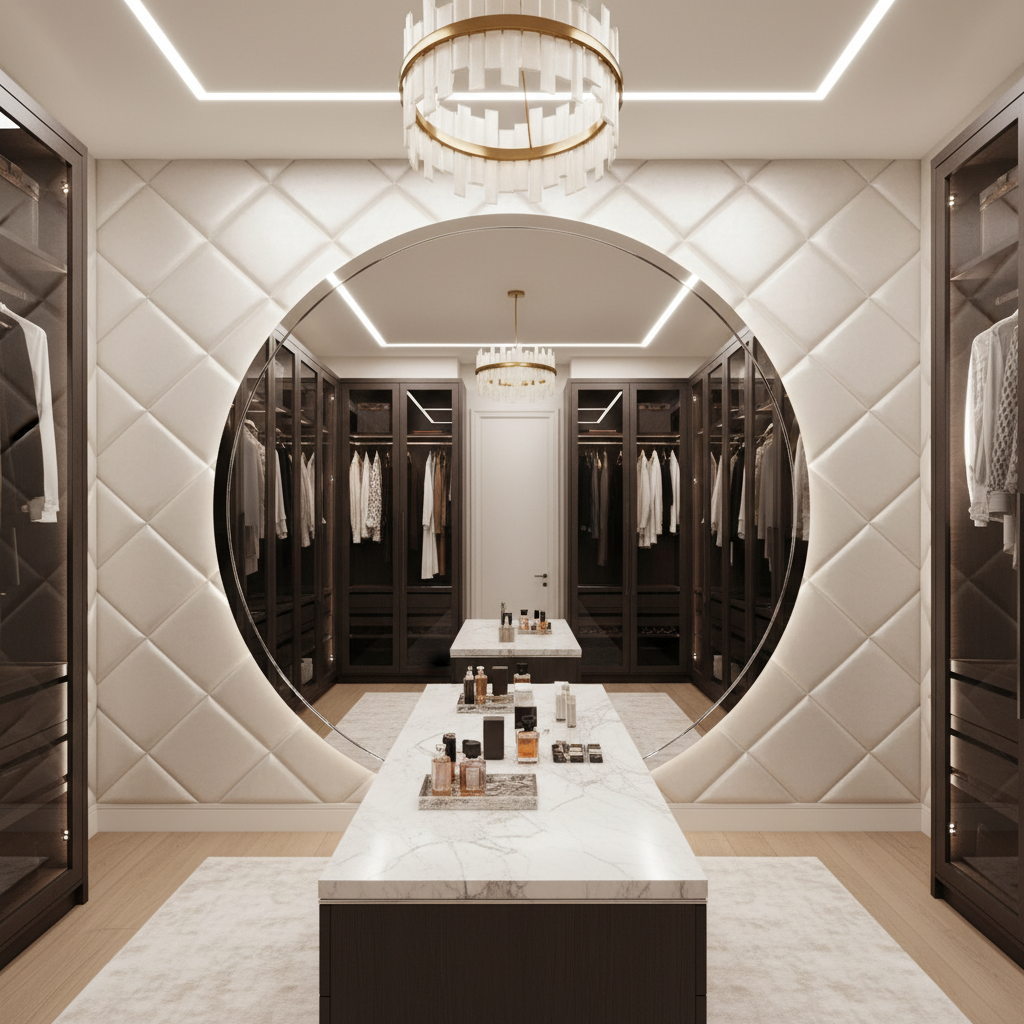
That matters in dressing rooms, salons, and formal bedrooms because reflective textiles interact with mirrors, polished metal, and controlled light. A surface with too much uncontrolled gloss can cheapen the room. A surface with disciplined sheen can make the room feel cleaner, deeper, and more precise. Silk is powerful because it can do that without becoming visually thick.
The practical rule is to match silk’s luster to the role of the surface. Panel inserts, low-contact upholstery, and framed textile zones allow sheen to read clearly. High-friction seat edges and heavily used corners often need a more resilient textile story. The point is not to avoid silk. It is to use it where its strengths stay visible.
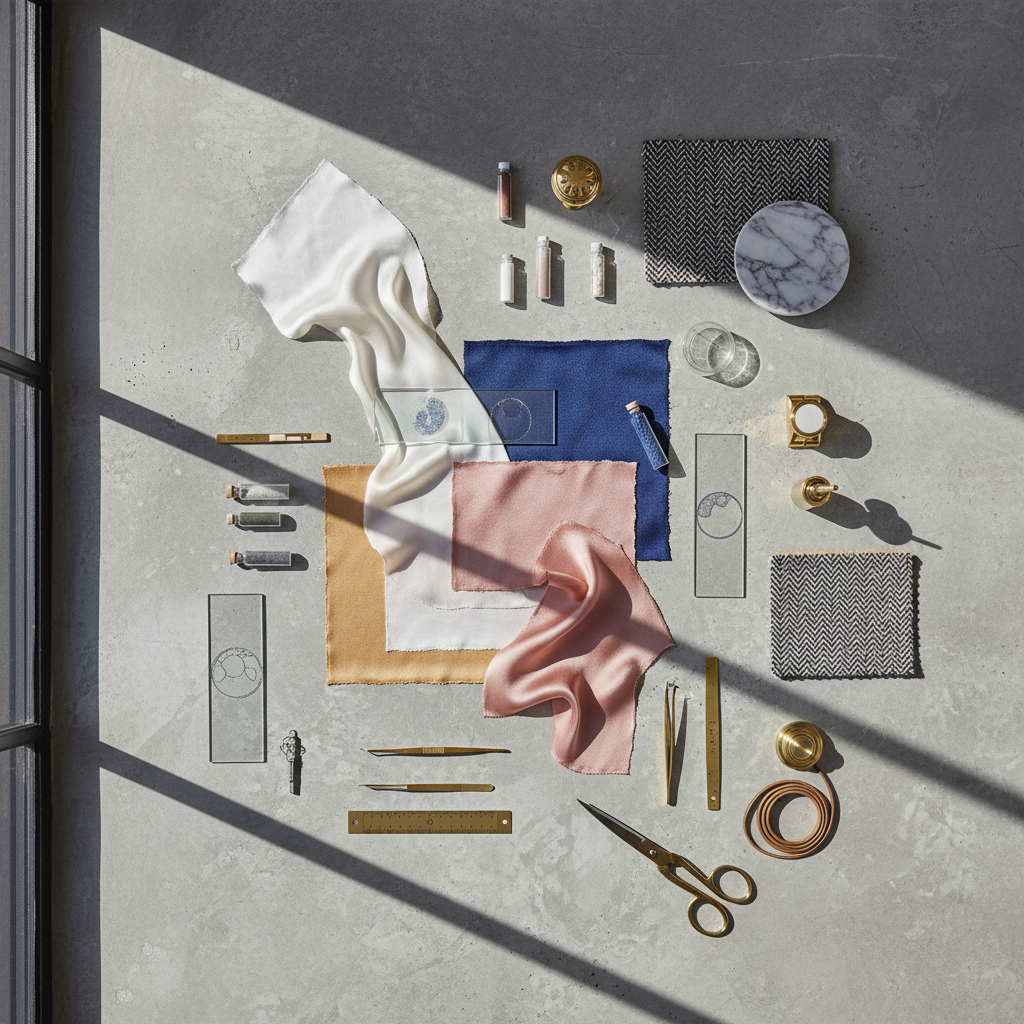
When luxury interiors look calm and expensive rather than loud and expensive, the reason is often hidden in the materials science. The room is not relying on ornament to announce value. It is relying on surfaces that are physically capable of producing a controlled visual effect every day.